
Sep 14, 2026
What Applications Require ASTM A790 Duplex 2205 Stainless Steel Pipe?
It is very important for ASTM A790 Duplex 2205 Stainless Steel Pipe to be strong, not rust, and last a long time in many fields. This duplex alloy can be used in places where regular stainless steel would break, like in chemical plants, systems that make hydrogen, and units that remove salt from the water in the ocean. The microstructure is a healthy mix of ferritic and austenitic, which gives it about twice the yield strength of 316L. It has a Pitting Resistance Equivalent Number (PREN) of around 33. This makes it the best material for daily exposure to chlorides, stress corrosion cracking, or harsh media.
|
|
|
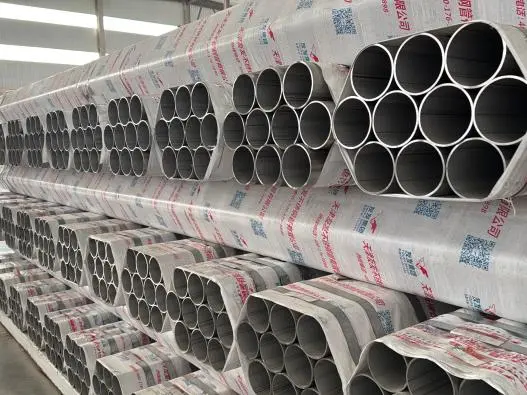
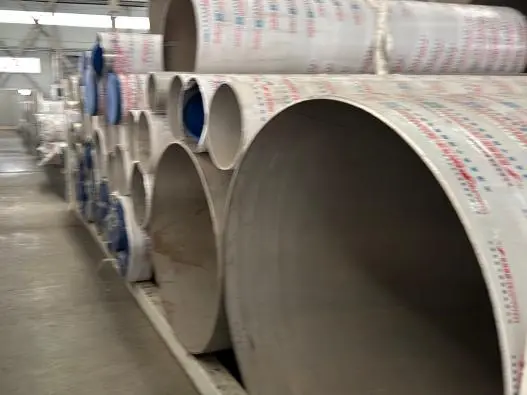
Understanding ASTM A790 Duplex 2205 Stainless Steel Pipe
Steel pipe ASTM A790 Duplex 2205 is made up of about half ferrite and half austenite in its microstructure. This gives it a unique ratio of strength to resistance to rust. It is mostly made up of 22% chromium, 3% molybdenum, 5–6% nickel, and a lot of nitrogen. Nitrogen makes it much less likely for cracks to pit or corrode because it helps to fix the austenite phase and is a strong solid-solution strengthener.
Chemical and Mechanical Benchmarks
To keep pipes from forming harmful sigma or chi phases, they need to be solution annealed between 1870°F and 2010°F and then quickly quenched in water. As for engineering needs, the least amount of yield strength is 65 ksi (450 MPa), and the least amount of tensile strength is 90 ksi (620 MPa). It is possible for walls to be thinner without dropping the pressure ratings because these numbers are so high. This grade has two UNS numbers: S31803 and S32205. More chromium, molybdenum, and nitrogen must be present in S32205 for it to have better rust protection at all temperatures.
Operating Limits Worth Knowing
You shouldn't use this stuff when it's hotter than 315°F (600°F). Things that are close to 475°C for a long time become weaker by forming an alpha-prime phase, which makes them less strong. When the procurement and design teams make system specs, they need to keep this thermal limit in mind.
Key Industrial Applications of ASTM A790 Duplex 2205 Pipe
Duplex 2205 is very adaptable because it can withstand more than one kind of damage at the same time. They can use lasting value to back up their choice if they know where the material will work best.
The Duplex 2205 regularly proves its worth in the following areas:
- Oil & Gas — Subsea and Offshore Infrastructure: In the oil and gas sector, acidic conditions containing hydrogen sulfide (H₂S) and carbon dioxide (CO₂) quickly corrode carbon steel and standard 300-series alloys. Duplex 2205 meets NACE MR0175/ISO 15156 standards for sour service, making it a reliable choice for flowlines, manifolds, and topside piping on offshore sites where unplanned shutdowns are extremely costly.
- Chemical Processing — Aggressive Media Handling: Chemical plants utilize Duplex 2205 for reactor piping, heat exchanger tubes, and transfer lines when handling bleaching agents, sulfuric acid, and phosphoric acid. It is preferred over 304 or 316L grades because it provides superior resistance to uniform corrosion and localized attack in acidic chloride environments, extending replacement cycles.
- Hydrogen Production — Electrolysis and Bipolar Systems: Green hydrogen facilities using PEM or alkaline electrolysis require piping that can withstand high-purity water, electrochemical contact, and variable pressures. Duplex 2205 maintains structural integrity and corrosion stability over long periods, meeting the new energy industry's requirement for durable electrochemical components.
- Marine and Desalination — Seawater Systems: High chloride concentrations in desalination plants, seawater cooling loops, and offshore ballast systems cause lower-grade alloys to pit rapidly. The high PREN of Duplex 2205 inhibits pitting initiation, while its strength allows for lighter structural designs in weight-sensitive naval applications.
- Pulp and Paper — Chemical Recovery Lines: Digesters and bleaching circuits in kraft pulp mills transport corrosive liquors at high temperatures. Duplex 2205 has demonstrated long-term durability in these environments by successfully resisting both chemical aggression and mechanical stress.
The materials must be able to handle both chemical attack and mechanical loading when they are used in these ways. In this case, duplex 2205 works well, but standard austenitic grades don't.
ASTM A790 Duplex 2205 vs Other Stainless Steel Pipes
You have to balance the need for performance with the budget you have when picking materials. Check out how Duplex 2205 compares to some other commonly used grades.
Duplex 2205 vs 316L
The PREN for 316L is around 24, but it's 33 for ASTM A790 Duplex 2205 Stainless Steel Pipe. Because of this difference, Duplex 2205 is much less likely to pit when chloride levels and temperatures are high. Also, its yield strength is almost twice as high as 316L's. This makes it possible for walls to be thinner, which helps balance out the higher cost of building materials. For 2205 chemical plants and infrastructure along the coast, the total cost of ownership is lower.
Duplex 2205 vs Super Duplex 2507
Some super duplex grades, like 2507 (UNS S32750), have a PREN above 40 and are designed to work in harsh acid and chloride conditions. On the other hand, there is a big price difference for 2507. If you choose 2507 instead of 2205, the job will cost more and not be better technically because 2205 works well enough for most marine, offshore, and chemical systems.
Duplex 2205 vs Carbon Steel
Carbon steel costs less at first, but in harsh environments where it rusts, it often needs expensive coatings, repairs, and replacements. In the oil and gas business, tests have shown that Duplex 2205 lasts a lot longer than coated carbon steel equipment and has a lower total cost of ownership in zones with chloride or acid.
Procurement Guide for ASTM A790 Duplex 2205 Stainless Steel Pipe
To get ASTM A790 Duplex 2205 Stainless Steel Pipe, you need to check everything very carefully to keep project risks under control. People who buy things don't just want low prices; they also want to be able to find the materials, see proof that the products were heat-treated, and be able to check that they meet the size requirements set by ASTM A790.
Some important things that providers need to do are show proof of correct solution annealing and quenching processes and give Material Test Reports (MTRs) that deal with specific heats. It is also important for buyers to make sure that the seller can give them both UNS S31803 and S32205 designations, since projects often need the stricter S32205 chemistry right now. Because duplex grades take longer to deliver than 304/316 stock, it is safer to buy them from a manufacturer with specific production capacity than from trading stock.
Welding and Installation Guidelines for Duplex 2205 Pipes
It is more important to be very careful when welding ASTM A790 Duplex 2205 Stainless Steel Pipe than when welding standard austenitic steels so that the join and heat-affected zone don't move out of phase. It's not as strong when there is too much austenite as when there is too much ferrite.
Process standards say to use filler metals that are over-alloyed with about 9% nickel to make up for the nitrogen that is lost and keep the right phase ratio. Care must be taken to control how much heat goes in so that neither grain growth nor sensitivity happens. It should be between 0.5 and 2.5 kJ/mm most of the time. To make sure the system is still solid after welding, you should use tests that don't damage it, such as dye penetrant, X-rays, or ultrasound waves. Also, keep the pipe away from carbon steel so that iron doesn't get into it and rust the outside.
Conclusion
Most stainless steels can't work at this level, but ASTM A790 Duplex 2205 Stainless Steel Pipe can. Because it is made of two different types of materials, has a high chromium-molybdenum-nitrogen content, and is very strong, it is ideal for use in oil and gas, chemical processes, hydrogen, spacecraft, and paper and pulp. The procurement teams choose reliable suppliers and make sure that things are installed correctly so that these tough businesses can get the dependability and service life they need.
FAQ
Why choose 2205 over 316L for coastal or marine piping?
2205 has a PREN of 33 compared to 24 for 316L, and its yield strength is roughly twice as high. This results in significantly better resistance to chloride pitting, crevice corrosion, and stress corrosion cracking in salt water and coastal environments.
What is the maximum service temperature for ASTM A790 2205?
Service temperatures should remain below 600°F (315°C). Exposure to temperatures near 475°C for extended periods can cause alpha-prime phase embrittlement, which significantly reduces the toughness of the material.
What is the difference between UNS S31803 and S32205?
S32205 has stricter minimum requirements for chromium, molybdenum, and nitrogen than S31803. This leads to more consistent and stable corrosion resistance across different production heats.
Does ASTM A790 require heat treatment?
Yes. To dissolve harmful intermetallic phases and stabilize the duplex microstructure, the pipes must be solution-annealed at 1870–2010°F and then rapidly cooled in water.
Can Duplex 2205 be welded without special procedures?
Welding is possible but requires extra steps, including controlled heat input and the use of over-alloyed filler metals (typically 9% Ni) to maintain the necessary phase balance and corrosion resistance in the weld zone.
Partner with YOUFA — Your Trusted ASTM A790 Duplex 2205 Stainless Steel Pipe Supplier
Youfa Stainless Steel Pipe Co., Ltd. has been in business since 2017 and makes 50,000 tons of steel every year on 15 lines. We are experts at making industrial pipe systems out of stainless steel. All of our materials can be tracked back to their source; we check them carefully for quality, and we offer quick technical support. It's up to you if you want to find a certified ASTM A790 Duplex 2205 Stainless Steel Pipe manufacturer for a one-time job or for the long term. Send us an email at info@youfass.com or visit youfass.com right away to get a price.
Online Message