
Sep 11, 2026
ASTM A790 UNS S32205 Pipe Improves Chemical Plant Corrosion Resistance
When a chemical plant experiences an unexpected pipe failure, the consequences ripple fast — production halts, safety risks escalate, and repair costs surge. Selecting the right piping material from the start is one of the most consequential decisions a procurement engineer makes. ASTM A790 UNS S32205 Steel Pipe has earned a strong reputation across demanding industrial environments precisely because it addresses the corrosion challenges that defeat conventional stainless steels. This guide walks through what makes S32205 duplex pipe technically superior, how it compares to alternatives, and what procurement professionals should know before sourcing it.
|
|
|
Understanding ASTM A790 UNS S32205 Duplex Stainless Steel Pipe
What Makes It a Duplex Grade?
S32205 is a better duplex stainless steel pipe that has a managed makeup. This means that its microstructure has about equal amounts of austenite and ferrite phases. Its performance is based on this dual-phase architecture. Unlike most austenitic grades, this balanced structure doesn't crack from stress corrosion and still has a high tensile strength.
Chemical Composition and Mechanical Properties
The metal has a Pitting Resistance Equivalent Number (PREN) of usually above 34 because it has about 22% chromium, 3% molybdenum, and high nitrogen levels (0.14–0.20%). Its minimum yield strength is 65 ksi (450 MPa), which is almost twice as strong as 316L. Its maximum tensile strength is over 90 ksi (620 MPa). Because of these numbers, it works well for high-pressure chemical service lines where lowering the wall thickness saves money on materials without affecting the structure's strength.
Seamless vs. Welded Pipe Specifications
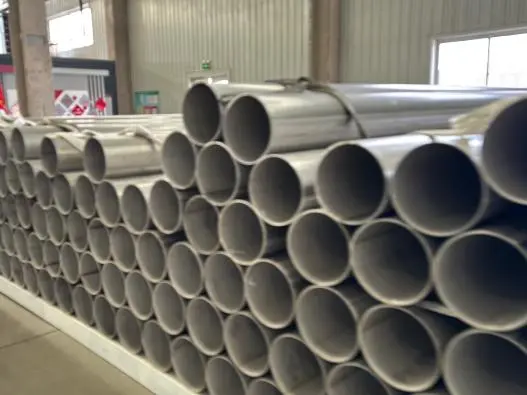
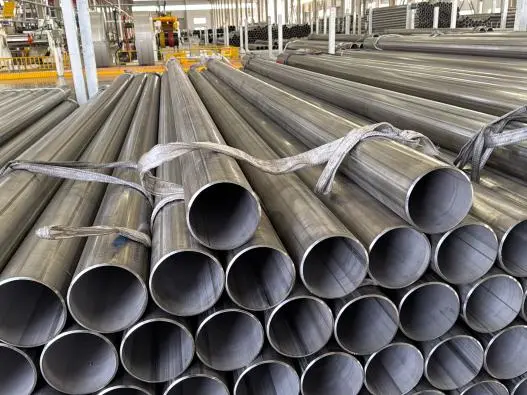
ASTM A790 covers both seamless and welded duplex stainless steel pipes with ferritic-austenitic microstructures. ASTM A790 UNS S32205 Steel Pipe is available in both seamless and welded forms, allowing buyers to select the appropriate manufacturing method based on application requirements. The outer diameters most commonly used range from 1/8 inch to 8 inches, while wall thickness options can range from Schedule 10S to Schedule 80S. For high-pressure or high-cycle fatigue applications, seamless ASTM A790 UNS S32205 Steel Pipe can provide advantages because it eliminates a longitudinal weld seam. For larger diameters, welded ASTM A790 UNS S32205 Steel Pipe can offer better dimensional control and production efficiency. Regardless of the manufacturing method, ASTM A790 UNS S32205 Steel Pipe must meet the applicable requirements for mechanical properties, corrosion resistance, dimensions, and testing specified by ASTM A790.
Why ASTM A790 UNS S32205 Pipe Excels in Corrosion Resistance for Chemical Plants
Pipes in chemical plants are often exposed to process streams that are high in chlorine, sulfuric acid, phosphoric acid, and changing temperature loads. These conditions speed up three important ways that things break down: stress corrosion cracking (SCC), pitting corrosion, and crevice corrosion. In these conditions, normal austenitic grades like 304 and 316L become weak, especially when chloride levels rise above a few hundred parts per million.
Each of these threats is immediately dealt with by S32205's duplex microstructure. The austenitic phase makes the steel tough and flexible, while the ferritic phase stops SCC. It has a lot of chromium and molybdenum, which makes the passive oxide film strong even in acidic or salty service conditions. The lab results that were reported in Corrosion Science (2019) show that S32205 has much lower pitting rates than 316L when it is exposed to sodium chloride liquids at high temperatures.
Here are the main performance benefits that chemical plant managers always look for in this grade:
- Superior pitting resistance: With a PREN above 34, S32205 is much better than 316L (PREN ≈ 24), which means it can handle harsh chloride conditions that break down normal grades in weeks.
- High SCC threshold: The balanced duplex microstructure raises the stress level needed for SCC to start much more than fully austenitic alloys do. This means that high-chloride, high-temperature pipe loops can be used for longer periods of time.
- Acid and alkali resilience: S32205 works well with phosphoric acid, dilute sulfuric acid, and caustic soda, so it can be used in many process streams in the same plant.
- Controlled heat treatment stability: Solution annealing after welding at 1020–1100°C restores the balance of austenite and ferrite phases in the heat-affected area. This ensures that the weld area has the same corrosion resistance as the base metal.
These benefits lead to longer replacement cycles, fewer unplanned shutdowns, and lower lifecycle maintenance costs, all of which are very important to both operations teams and people who make financial decisions.
Comparing ASTM A790 UNS S32205 with Alternative Stainless Steel Pipes
People who work in procurement often compare S32205 to austenitic grades of ASTM A312 and the duplex metal S31803. Knowing the differences helps you avoid being too detailed or too general.
People often get the difference between S32205 and S31803 wrong. ASTM A790 UNS S32205 Steel Pipe is manufactured to stricter composition requirements than the older S31803 grade, which contributes to more consistent performance. For example, ASTM A790 UNS S32205 Steel Pipe requires a higher minimum nitrogen content of 0.14% compared with 0.08% for S31803, along with a slightly higher minimum molybdenum content. These alloying requirements help increase the PREN and improve resistance to stress corrosion cracking (SCC). For demanding applications, ASTM A790 UNS S32205 Steel Pipe is often preferred because of its controlled chemistry and more consistent corrosion performance. As a result, specifying ASTM A790 UNS S32205 Steel Pipe can provide greater reliability in environments where strength and resistance to localized corrosion are critical.
When compared to ASTM A312 316L pipe, S32205 has about twice the yield strength and much better chloride SCC protection. However, 316L is still a cheaper option for light chemical service where SCC and pitting are not major issues. When process conditions get worse, like higher temperatures, salt loads, or cycle pressure, S32205 becomes the better choice from an economic point of view because it uses less material, which makes up for its higher cost per kilogram.
Super duplex grades, like UNS S32750, have PREN values above 40 and can be used in the harshest marine or acidic conditions. But they cost a lot more than the ordinary ones. For most chemical plant pipes, S32205 is a good compromise between standard grades and super duplex. It offers better security than standard grades without the higher cost.
Procurement Insights: Sourcing ASTM A790 UNS S32205 Steel Pipe for Chemical Plants
It takes more work to find certified duplex pipe than standard commodity stainless. This is what buying teams should always look at.
Mill test reports (MTRs) must show that the chemical composition and mechanical properties meet the standards set by ASTM A790. An important extra layer of verification is third-party inspection by accredited laboratories that includes hydrostatic testing, PMI (positive material identification), and ultrasonic examination. The manufacturer's ISO 9001 approval helps keep the process control consistent.
Prices change based on the nickel and molybdenum markets, the size of the pipe, and the number of orders. Most of the time, lead times are between four and twelve weeks, depending on whether the inventory is taken from mill stock or made to order. Getting in touch with a confirmed ASTM A790 UNS S32205 Steel Pipe supplier that can track where their raw materials come from greatly lowers the chance of getting grades that aren't what they say they are, which is a known issue in the commodity pipe market.
Case Studies & Practical Applications in Chemical Plants
A plant in the Gulf Coast area that processes phosphoric acid changed its 316L transfer lines with S32205 duplex pipe after they kept breaking down due to cracking within 18 months of installation. Over the course of 36 months of monitoring after the conversion, there were no pitting events, and the plant got rid of two planned shutdowns for pipe inspections, which returned about 240 hours of yearly production capacity.
In a chlor-alkali plant that worked with wet chlorine gas and saturated brine, S32205 process pipes kept their passive film integrity at temperatures as high as 280°C, which is well below the alloy's suggested service temperature of 300°C. The plant's maintenance team said that over three years, corrosion-related repair costs were 40% lower than with the old austenitic pipe system.
The results show a pattern that is consistent across electrochemical, refining, and acid-handling environments: the material's higher initial cost is recouped within one to two replacement cycles of a lower-grade alternative.
Conclusion
Pipes that fail because of corrosion can cost chemical plants far more than the initial investment in high-quality materials. ASTM A790 UNS S32205 Steel Pipe offers an effective combination of mechanical strength, resistance to pitting corrosion, and resistance to stress corrosion cracking (SCC), directly addressing common corrosion mechanisms found in harsh chemical environments. By providing reliable performance under demanding operating conditions, ASTM A790 UNS S32205 Steel Pipe can help reduce unplanned maintenance, replacement costs, and production downtime. Compared with standard austenitic grades and older duplex alloys, ASTM A790 UNS S32205 Steel Pipe can provide a more durable and cost-effective solution for procurement teams focused on long-term plant efficiency. Selecting ASTM A790 UNS S32205 Steel Pipe can therefore support greater operational reliability and better lifecycle cost management.
FAQ
What is the difference between S31803 and S32205?
S32205 has stricter composition limits, which means it has higher minimum amounts of chromium, molybdenum, and nitrogen. This makes it stronger against stress corrosion cracking and increases its PREN. The older standard is S31803, but most new projects in the business are using S32205.
Can this duplex pipe be welded on-site?
Yes, welding needs careful control of the heat input and filler metals like ER2209 to keep the balance of the austenite and ferrite phases in the weld and heat-affected zone. Solution annealing after welding restores the best qualities.
Is it suitable for high-temperature chemical service?
This item should be used between -50°C and 300°C. Long-term contact with temperatures above 315°C can lead to 475°C embrittlement, which makes things less tough and should be avoided in design.
How does S32205 compare to 904L?
It costs less than 904L and has a much higher yield strength and better SCC protection. This is mostly because it has less nickel in it. S32205 is a better deal for most chemical plant uses.
What surface finish maximizes corrosion resistance?
As per ASTM A380, the surface should be pickled and passivated. This treatment gets rid of any dirt on the surface and makes sure that a strong chromium oxide passive layer forms, which increases the metal's resistance to corrosion in service.
Partner with YOUFA for Certified S32205 Duplex Pipe Supply
Since 2017, YOUFA has been making stainless steel pipe systems. They have 15 production lines that make 50,000 tons of steel every year. As an ASTM A790 UNS S32205 Steel Pipe supplier, we can provide full MTR documentation, quality control that meets ISO standards, and reliable shipping around the world. Engineers and purchasing managers who want reasonable prices and confirmed stock can email us at info@youfass.com or go to youfass.com to ask for a quote.
Online Message