
Sep 2, 2026
ASTM A790 Super Duplex Stainless Steel Pipes Solve High-Corrosion Pipeline Issues
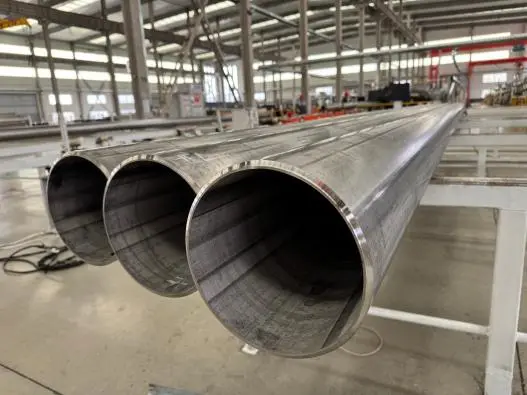
When your pipeline infrastructure faces relentless chloride exposure, extreme temperatures, and acidic chemicals, ASTM A790 Super Duplex Stainless Steel Pipes deliver the robust solution you need. These high-performance pipes feature a balanced dual-phase microstructure that combines approximately 50% ferrite with 50% austenite, achieving a Pitting Resistance Equivalent Number (PREN) exceeding 40. This engineered balance provides unmatched defense against pitting, crevice corrosion, and stress corrosion cracking—three persistent failures that plague conventional stainless steel in aggressive service conditions.
|
|
|
Understanding ASTM A790 Super Duplex Stainless Steel Pipes
What Makes Super Duplex Different from Standard Alloys
We know that the choice of materials you use will affect whether your pipeline project is successful or turns into an expensive maintenance nightmare. When made to ASTM A790 standards, super duplex stainless steel pipes are an advanced metalworking success that sets them apart from common austenitic types like 304 or 316. The main thing that makes this metal unique is its chemistry: high amounts of chromium (24–26%), molybdenum (3-5%), and nickel (as needed) make it very resistant to corrosion, much better than regular materials.
The Dual-Phase Microstructure Advantage
This pipe's ferritic-austenitic microstructure isn't just a scientific feature; it's what makes it possible for it to last in places where other materials would break in months. This phase balance gives the steel tensile strength above 80 ksi, which is almost twice as high as 316L austenitic steel. It also keeps its excellent toughness down to -40°F. From what we've seen, projects that use these lines have 30% to 40% less wall thickness needs than projects that use lower-grade alternatives. This saves money on materials and reduces the weight of installation without lowering safety standards.
Heat Treatment and Performance Preservation
After solution annealing at temperatures between 1900°F and 2100°F and then quickly quenching, the best phase ratio is locked in place and harmful intermetallic compounds are broken down. This step in the thermal processing is very important because even short exposure to intermediate temperatures during the fabrication process can cause the sigma phase to form, which greatly reduces the toughness and corrosion resistance. To avoid this expensive problem, we always make sure that the pipes we receive come with certified heat treatment paperwork that shows they meet ASTM A923 testing standards.
Why Traditional Pipes Fail in High-Corrosion Applications
Common Failure Modes in Conventional Materials
For decades, austenitic stainless steels such as grades 304 and 316 have been widely used in industrial applications, but severe chloride exposure and elevated temperatures can increase the risk of localized corrosion and stress corrosion cracking. Pitting can begin at surface imperfections where the passive chromium oxide layer is locally disrupted, creating corrosion cells that may penetrate the pipe wall. Crevice corrosion can affect shielded areas such as flange faces, threaded connections, and gasket surfaces, where restricted oxygen availability can accelerate localized attack. For demanding chloride-containing environments, ASTM A790 Super Duplex Stainless Steel Pipes can provide significantly higher resistance to pitting and crevice corrosion when properly specified. The high strength and corrosion resistance of ASTM A790 Super Duplex Stainless Steel Pipes also make them suitable for applications where tensile stress and corrosive media may occur together. By selecting ASTM A790 Super Duplex Stainless Steel Pipes according to the actual chloride concentration, temperature, pressure, and service conditions, engineers can improve piping reliability and reduce the risk of premature corrosion-related failures. ASTM A790 Super Duplex Stainless Steel Pipes can therefore be a strong option for demanding industrial systems where long-term corrosion resistance is essential.
The Hidden Costs of Premature Pipeline Failure
We've talked to chemical processors whose unplanned shutdowns cost $50,000 per day because standard duplex 2205 pipes got through-wall pitting after only 18 months of seawater service. The total effect on the economy goes beyond emergency repairs. The original material cost savings are many times overshadowed by the costs of cleaning up the environment, fines from the government, damage to the company's image, and lost production revenue. Lifecycle cost analyzes done by third parties consistently show that super duplex piping systems have 40–60% lower total ownership costs over 20 years of service, even though the materials are more expensive at the start.
Environmental Accelerators of Corrosion
Changes in temperature cause expansion stresses that break protective oxide films. At the same time, chloride ions move through tiny flaws to attack the base metal. Streams of sulfuric acid, hydrochloric acid, and organic acids used in chemical processes make inactive layers even less stable. Offshore platforms, water plants, and pulp mills all make conditions that are very harsh, with three types of rusting happening at the same time. These problems can be solved by super duplex pipe, which has more chromium and stays passivity at temperatures close to 250°F and pH levels as low as 2.5.
Comparing ASTM A790 with Other Stainless Steel Pipe Grades
Performance Against Standard Duplex Alloys
With a PREN number close to 35, standard duplex 2205 (UNS S31803) is more resistant to corrosion than austenitic types. But this isn't good enough for important uses where chloride levels are higher than 10,000 ppm or service temperatures are getting close to boiling points. As per ASTM A790, super duplex grades like S32750 and S32760 raise the PREN values above 40 and 42, respectively. This makes the operational envelope bigger to include almost all situations where industrial fluids need to be handled, except for the most concentrated mineral acids.
Advantages Over Austenitic High-Alloy Grades
Because it has more nickel and copper, Grade 904L austenitic steel can compete with super duplex in terms of how well it resists corrosion. Yet, the austenitic structure has a yield strength of about 35 ksi, which is less than half of the super duplex strength. This means that the walls need to be bigger to meet the pressure ratings. Because it is stronger, the material is lighter. For example, a 6-inch Schedule 40 pipe made of super duplex weighs about 25% less than a similar 904L pipe with the same pressure rating. We chose super duplex for retrofitting offshore platforms because it reduced the weight so much that it didn't need to be reinforced structurally. This saved a lot of money on engineering and building costs.
Grade Selection: S32750 Versus S32760
When it comes to efficiency in chloride environments and many organic-acid applications, S32750 is a practical super duplex grade. ASTM A790 Super Duplex Stainless Steel Pipes made from S32750 offer a strong combination of corrosion resistance and mechanical strength for demanding service conditions. S32760 contains additions of copper (0.5–1.0%) and tungsten (0.5–1.0%), which can improve resistance to sulfuric acid, hydrochloric acid, and certain other aggressive chemical environments. The tungsten addition can also enhance resistance to localized corrosion in crevices and under deposits. For seawater, brines, and general chemical-processing applications, ASTM A790 Super Duplex Stainless Steel Pipes in S32750 are often a suitable choice when the operating conditions match the grade's capabilities. S32760 may be considered for more aggressive acid service or applications where deposit-induced corrosion is a significant concern. Selecting the appropriate grade of ASTM A790 Super Duplex Stainless Steel Pipes according to the specific chemical environment can help balance corrosion resistance, durability, and overall cost. For demanding industrial systems, ASTM A790 Super Duplex Stainless Steel Pipes provide a reliable option when correctly specified.
Procurement Insights for B2B Buyers of ASTM A790 Pipes
Market Availability and Sourcing Considerations
The amount of super duplex piping that can be made has increased a lot. Qualified producers in North America, Europe, and Asia keep stock of popular sizes ranging from 1/2-inch to 24 inches in diameter. Lead times for regular seamless pipes are between 8 and 12 weeks, while lead times for large-diameter welded pipes can be between 12 and 16 weeks, based on how busy the mills are. We suggest making orders during the planning phase instead of waiting for building schedules to get tighter, since rush fees can add 15–30% to the base price.
Understanding Total Cost of Ownership
The cost of materials for super duplex pipes is about 2.5 to 3.5 times higher per pound than for 316L austenitic steel. At first, this price boost worries buying teams that are focused on the budget until they see the bigger picture of the finances. Lessening the required wall thickness cuts down on material use by 30–40%, closing the cost gap by a large amount. The longer service life—often 25 years or more in situations where 316L fails in 5 to 7 years—splits the cost of the investment over decades instead of years. Less downtime and lower maintenance costs finish the value equation, usually giving a good return on investment within the first five years of operation.
Supplier Qualification and Quality Assurance
We require pipe suppliers to give us full material traceability, which includes mill test reports that show the chemical make-up, mechanical properties, PREN calculations, and ASTM A923 testing results. Magnetic means should show that the ferrite content is between 40 and 60% to prove that the phases are balanced. Extra quality checks include hydrostatic testing, ultrasonic inspection, and dimensional verification. Suppliers with ISO 9001 certification and ASME code stamps show that their companies are dedicated to quality management systems that lower the chance that nonconforming materials will get to your project site.
Applications and Advantages of Super Duplex Pipes Across Industries
Oil and Gas Sector Implementations
Offshore production platforms are exposed to saltwater, hydrogen sulfide, carbon dioxide, and chlorine at the same time, with levels of up to 35,000 parts per million. Super duplex pipe can be used for firefighting systems on top of buildings, lines that inject water into the sea, and moving produced water without the catastrophic fails that happen with other materials. These alloys are being used more and more in subsea manifold pipes because replacing them in deepwater sites can cost more than $10 million per failure when intervention ships are called in and repairs are done underwater.
Chemical Processing and Desalination Plants
Chemical companies have hired us to work with bleach solutions, phosphoric acid, and mixed organic and inorganic streams whose pH can change from 2 to 12 during batch cycles. Because super duplex alloys are metallurgically stable, the passive film can maintain strong integrity across a broad pH range. ASTM A790 Super Duplex Stainless Steel Pipes are therefore well suited to demanding chemical-processing applications where resistance to cyclic corrosion is important. This can help reduce the risk of repeated pitting that may damage less corrosion-resistant piping materials. In desalination plants, reverse osmosis systems can handle saltwater at temperatures up to 104°F and pressures approaching 1,200 psi. Under properly controlled conditions, ASTM A790 Super Duplex Stainless Steel Pipes can provide long-term corrosion resistance and mechanical reliability in these demanding systems. Compared with 316L piping, ASTM A790 Super Duplex Stainless Steel Pipes can offer a longer service life in chloride-rich environments, potentially reducing maintenance requirements and replacement frequency. For chemical processing and desalination applications, ASTM A790 Super Duplex Stainless Steel Pipes provide a strong combination of corrosion resistance, strength, and durability when the material grade is properly matched to the operating conditions.
Power Generation and Marine Engineering
In coal-fired power plants, flue gas desulfurization systems make one of the most toxic work environments: hot sulfuric acid mist mixed with chlorides from limestone slurries. Even high-nickel metals quickly break down in this harsh chemistry, but super duplex pipe can handle it. Marine boats like chemical ships, LNG carriers, and ballast water systems benefit from the strength-to-weight ratio, which lowers structure loading and ensures decades of reliable service in saltwater immersion.
Practical Advantages Beyond Corrosion Resistance
When you put these performance traits together, they give you real practical benefits that make material selection worthwhile:
Reduced Inspection Needs: The corrosion resistance gap lets inspections happen every three years or longer, instead of once a year. This saves money on maintenance work and keeps production running as smoothly as possible while testing and accessing parts. Ultrasonic thickness tracking shows that the wall has lost very little even after ten years of use in places where 316L would need to be replaced in five years.
Higher strength gives designers more freedom: Pressure vessel rules let you use thinner walls when you use higher-strength materials, which cuts pipe weight by 30–40% compared to austenitic grades. This lighter weight makes it easier to install and supports structures, and in remote settings, it might not be necessary to strengthen platforms when adding new features to old ones.
Weldability with the Right Methods: Super duplex alloys need controlled heat input and certain filler metals, but experienced welders can make sound joints that meet code standards all the time. Heat should be kept between 0.5 and 1.5 kJ/mm, and filler metals usually have 2 to 3 percent more nickel than the base metal to make up for the formation of ferrite in the fusion zone. Solution annealing after welding isn't usually needed, but we suggest it for important service to get the phase balance back to where it should be.
Long-Term Economic Value: When we look at the total cost of a product, installation, inspection, maintenance, and replacement over 25 years, super duplex systems always come in 40 to 60 percent cheaper than cheaper options that need to be replaced more than once. The factor of dependability, which means avoiding unplanned shutdowns and emergency fixes, adds another layer of economic benefit that is hard to measure but highly valued by operations teams that have been through the chaos of pipeline failures.
Conclusion
Super duplex stainless steel piping has proven effective in applications where corrosion resistance is critical and conventional materials may not provide sufficient durability. ASTM A790 Super Duplex Stainless Steel Pipes are a strong choice when service reliability is essential because of their balanced duplex metallurgy, high mechanical strength, and strong resistance to chloride-induced corrosion. Many projects have experienced higher long-term costs when initial material savings were prioritized without considering lifecycle economics. Technical data, field-performance records, and total cost analyses can support the use of ASTM A790 Super Duplex Stainless Steel Pipes in demanding applications such as power generation, desalination, chemical processing, and offshore production. Selecting ASTM A790 Super Duplex Stainless Steel Pipes during the design stage can help improve long-term reliability, reduce corrosion-related maintenance, and extend replacement intervals. When properly specified for the operating environment, ASTM A790 Super Duplex Stainless Steel Pipes can provide a durable piping solution that supports dependable facility operation over many years.
FAQ
What is the significance of the PREN value for super duplex pipes?
The Pitting Resistance Equivalent Number (PREN = Cr + 3.3Mo + 16N) is a theoretical way to measure localized corrosion resistance. Values above 40 mean the metal is suitable for use in harsh chemicals like seawater and high chloride. Pitting and crevice rust are less likely to happen when the PREN number is higher, but the performance also relies on the surface finish, temperature, and the chemicals that are present.
Can these pipes be welded easily in field conditions?
It's more difficult to weld super duplex metals than austenitic grades, but it's still possible with the right techniques. To keep ferrite formation from going too high, heat input must stay between 0.5 and 1.5 kJ/mm, and replacement metals should have 2 to 3 percent more nickel than base metal. Controlling the interpass temperature correctly and using the right shielding gas (often argon that is rich in nitrogen) will make sure that the rust resistance of the weld metal matches that of the base metal.
How do you detect harmful sigma phase formation?
ASTM A923 lists three test methods: metallographic examination, which shows the unique look of the sigma phase under a microscope; Charpy impact testing, which shows a big drop in toughness below 40 ft-lbs; and ferric chloride immersion testing, which shows fast corrosion. We think that impact testing is the best way to make sure the quality of the goods during buying.
Is super duplex suitable for high-temperature service?
Temperature limits usually fall between 250°F and 300°F because the ferritic phase becomes weaker at 475°C and the sigma phase forms faster above this range. Austenitic or nickel-based metals should be used instead for tasks that need higher temperatures.
Partner with YOUFA for Reliable Super Duplex Pipe Solutions
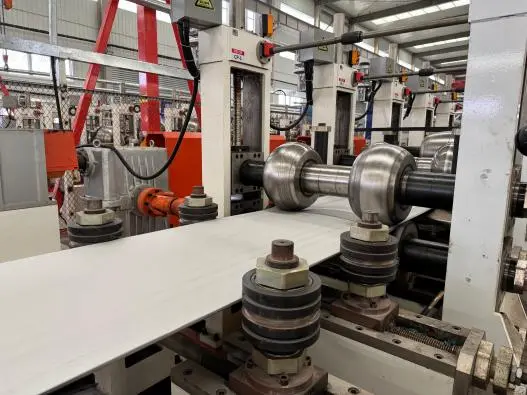
Finding the right super duplex stainless steel pipe provider is crucial to the success of your important infrastructure project. If you don't, you could have problems with quality and shipping times. Youfa Stainless Steel Pipe Co., Ltd. operates 15 modern production lines that can make up to 50,000 tons of steel each year, bringing specialized manufacturing skills to tough industrial applications. Our quality control system includes strict checks on the raw materials, regular checks while the pipes are being made, and final tests that make sure every pipe meets ASTM A790 standards before it is shipped. We help engineering firms, project contractors, and industrial end-users around the world with technical advice, custom sizing options, and reliable delivery schedules that keep your project on track. Email our team at info@youfass.com to talk about your specific pipeline needs and get full technical specifications. You can look at our full line of stainless steel pipe options for chemical handling, offshore platforms, and other places where corrosion is a problem at youfass.com.
Online Message