
Aug 31, 2026
ASTM A789 UNS S32750 Welded Steel Pipe Supports High-Pressure Oil Applications
When high-pressure oil operations demand exceptional corrosion resistance and mechanical strength, the ASTM A789 UNS S32750 Welded Steel pipe delivers reliable performance in the most challenging environments. This super duplex stainless steel piping solution combines superior chloride stress corrosion cracking resistance with excellent pressure handling capabilities, making it the preferred choice for offshore platforms, subsea pipelines, and oil processing facilities where material failure is not an option. Its balanced ferritic-austenitic microstructure provides twice the strength of conventional austenitic grades while maintaining excellent weldability and long-term durability in aggressive media.
|
|
|

Understanding ASTM A789 UNS S32750 Welded Steel Pipe
Super duplex stainless steel pipes are a big step forward in the science of materials engineering. They are made to last in the toughest industrial environments. The name of the material, UNS S32750, refers to a carefully controlled chemical composition that gives it great performance properties.
Chemical Composition and Material Properties
About 25% of the super duplex metal is chromium, 7% is nickel, 4% is molybdenum, and 0.27% is nitrogen. With this exact balance, a two-phase substructure is made up of about equal amounts of ferrite and austenite. The amount of chromium gives it basic resistance to corrosion, and the molybdenum makes it more resistant to pitting and crevice corrosion in salt settings. Nitrogen makes the material stronger and more resistant to corrosion. It works better than standard duplex grades like UNS S31803 in almost every way that can be measured.
The Pitting Resistance Equivalent Number (PREN) for UNS S32750 is higher than 40, which means it is very resistant to localized corrosion in seawater and other fluids that contain chloride. Based on this alone, super duplex pipes are the best choice for high-pressure oil applications where saltwater contamination is a constant risk to the pipes' integrity.
Mechanical Strength Characteristics
The tensile strength of UNS S32750 is usually between 800 and 1000 MPa, and the yield strength is more than 550 MPa. When compared to austenitic stainless steels, these values allow wall parts to be smaller while still having the same pressure ratings. The smaller amount of material used directly saves money on costs during manufacturing and installation. This is especially true for large-diameter pipeline projects where weight reduction is very important.
The hardness ranges from 290 to 310 HV, which means it is very resistant to damage from wear and corrosion. In oil and gas service, where rough particles and fast-moving fluids make conditions very rough, this hardness trait makes the service life much longer than what normal materials can provide.
Manufacturing Process and Dimensions
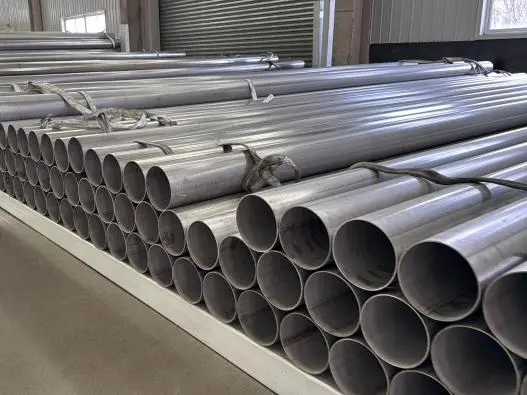
Large-diameter super duplex pipes with an outer diameter of 114.3 mm to 2500 mm are made using Electric Fusion Welding (EFW) technology. The wall thickness is based on the available plate thickness and the needs of the project. Usually, it can handle pressures ranging from normal industrial service to very high pressures. Solution annealing and water cooling make sure that the phases are balanced and that the pipe is resistant to rust all the way through.
When used for large diameters, welded structure has clear benefits. The way the product is made lets the dimensions be changed in a way that uniform methods can't, especially for sizes bigger than 300 mm. When you weld something correctly, the properties of the material stay the same across the weld seam. This makes the pipe's performance the same all the way along its length.
Advantages of ASTM A789 UNS S32750 Welded Steel Pipe in High-Pressure Oil Applications
Some of the toughest working conditions that any piping material will face are in oil and gas activities. High pressures, corrosive fluids, changes in temperature, and mechanical stresses all work together to test the limits of materials all the time.
Superior Performance in Corrosive Environments
One of the main ways that stainless steel pipes fail in oil fields is through stress corrosion cracks caused by chloride. Standard austenitic types, like 316L, can fail in this way when chloride levels are higher than 100 ppm, especially when temperatures hit 60°C or higher. Even at salt levels that are many orders of magnitude higher, UNS S32750 doesn't crack from stress corrosion, so it can keep its structure intact where other materials would break.
Based on ASTM G48 ferric chloride testing, the material is five times or more resistant to pitting and crevice corrosion than 316L. In real life, this means longer service life in sour gas settings with hydrogen sulfide, carbon dioxide, and chlorides, which is exactly what happens when oil is extracted from the ocean.
Enhanced Pressure Ratings and Safety Margins
Because super duplex stainless steel has a high yield strength, ASTM A789 UNS S32750 Welded Steel pipe can be used in high-pressure applications while providing strong resistance to permanent deformation. When ASTM A789 UNS S32750 Welded Steel pipe is specified for a project, engineers may be able to select thinner wall sections while achieving the required pressure rating compared with some thicker-walled austenitic stainless steel pipes, depending on the design conditions and applicable codes. This can reduce material usage and overall system weight while maintaining the required safety margins. The high strength of ASTM A789 UNS S32750 Welded Steel pipe also makes it a practical option for demanding piping systems where pressure resistance, durability, and material efficiency are important. For suitable applications, ASTM A789 UNS S32750 Welded Steel pipe can help balance structural performance, material costs, and long-term reliability.
During pressure spikes and water hammer events, the material's high strength keeps it from failing in a way that could damage the environment, stop production, or cause a safety issue. Being strong and flexible at the same time makes it resistant to both steady-state operating conditions and short-term pressure spikes.
Lifecycle Cost Advantages
The starting cost of materials for super duplex pipes is higher than those for normal stainless steel grades, but UNS S32750 always comes out on top in calculations of total cost of ownership for demanding uses. Over the system's operational life, it saves a lot of money because it needs less maintenance, replacements happen less often, and there is no unplanned downtime.
In seawater pumping service, documented case studies from North Sea offshore platforms show that super duplex pipe systems last more than 25 years, while 316L stainless steel only lasts 8 to 12 years in the same situations. The threefold longer service life more than makes up for the higher initial cost, especially when you consider how much it costs to replace pipes on offshore installations.
Comparing ASTM A789 UNS S32750 With Other Duplex Stainless Steel Pipes
To choose the right material, you need to carefully weigh the performance needs against the choices that are offered. Procurement experts can choose the best material for each job by knowing the differences between duplex types.
UNS S32750 Versus UNS S32205
Standard duplex grade UNS S32205, which is also called 2205, is the duplex stainless steel that is most often used. With a PREN rating of about 35, it resists corrosion well enough for most uses, but not well enough for very aggressive conditions. The PREN value of S32750 is higher than 40, which makes it much more resistant to pitting, crevice corrosion, and stress corrosion cracking.
The mechanical features are also very different. The minimum yield strength for S32205 is 550 MPa, while the minimum yield strength for S32750 is 550 MPa. This 20% increase in strength lets wall thickness be lowered, or pressure ratings be raised in S32750 applications.
Welded Versus Seamless Construction
There are some benefits to seamless pipes, like having uniform material qualities and not having to weld seams. However, they can only be made in smaller sizes and cost more per unit. If the right welding steps are taken, welded pipes can be shaped in a variety of ways, are cost-effective when they're big, and work well enough.
Modern Electric Fusion Welding methods make welds that are uniform, of high quality, and meet strict performance standards. Comprehensive testing methods, such as ultrasound examination, radiographic inspection, and ferrite balance verification, make sure that the properties of the weld zone match the specs of the base material.
Selection Criteria for High-Pressure Applications
Materials for offshore oil platforms and underwater pipeline systems need to withstand high pressure, salt exposure, and mechanical stress. When operating pressures exceed 100 bar, chloride levels exceed 20,000 ppm, or service temperatures approach or exceed 200°C, ASTM A789 UNS S32750 Welded Steel pipe can be considered for demanding applications requiring high corrosion resistance and mechanical strength. ASTM A789 UNS S32750 Welded Steel pipe is particularly relevant where chloride-rich environments can increase the risk of corrosion-related failures. For offshore systems exposed to seawater and elevated mechanical loads, ASTM A789 UNS S32750 Welded Steel pipe can provide a durable piping option when its temperature, pressure, and corrosion-resistance characteristics match the service conditions. Proper engineering evaluation remains important when selecting ASTM A789 UNS S32750 Welded Steel pipe for high-pressure offshore and subsea systems.
Chemical production plants that work with acidic chloride solutions also benefit from S32750's higher strength. Maintaining structural integrity, the material works well in places where S32205 would rust more quickly, ensuring long-term dependability without early failures.
Procurement Guide for ASTM A789 UNS S32750 Welded Steel Pipes
To buy super duplex pipes successfully, you need to pay attention to the supplier's skills, quality paperwork, shipping plans, and pricing structures. Strategic sourcing methods keep total acquisition costs low while making sure the quality of the materials meets project requirements.
Supplier Evaluation and Selection
Manufacturers who are qualified keep their ISO9001 quality management systems up to date, get PED approval for their pressure tools, and have third parties check their production processes. TÜV approval adds to the confidence that a product can be made and that strict quality control is being used. These licenses are more than just pieces of paper; they show that you take a structured approach to quality, which lowers the risk of buying something.
When project deadlines are short, production capacity is important. Companies that make more than 50,000 tons of goods a year usually keep enough stock on hand to handle rush orders without sacrificing quality. Smaller suppliers might have lower prices, but they don't have the tools to handle big projects or fast deliveries.
Documentation and Traceability Requirements
Mill test certificates (MTC) that meet EN 10204 3.1 or 3.2 norms are the first step in fully tracking materials. These papers check that each production lot has the right chemical make-up, mechanical qualities, and heat treatment factors. Third-party inspection (TPI) reports are an independent way to check that the properties of a material and its dimensions are correct.
Procedure Qualification Records (PQR) and Welding Procedure Specifications (WPS) list the welding factors that were used during production. Manufacturing Process Sheets (MPS) show the whole process of making something, and results from ultrasonic testing (UT) and radiography testing (RT) make sure the weld is solid. For important applications, this complete documentation package makes sure that everything can be tracked and that regulations are followed.
Logistics and Delivery Considerations
The lead time for super duplex welded pipes is usually between 6 and 12 weeks, but it depends on the size, amount, and workload of the maker. Companies that offer shorter delivery windows keep strategic stock on hand or run specialized production lines that can quickly meet customer needs. With 15 production lines and the ability to make pipes in a variety of ways, YOUFASS can get pipes to Tianjin Port in as little as 7 days for standard orders.
The minimum order quantity for ASTM A789 UNS S32750 Welded Steel pipe can vary depending on the pipe size, specifications, and manufacturer. Some suppliers may require container-load quantities, while others can accommodate small orders, including single pieces for testing, maintenance, or replacement purposes. When sourcing ASTM A789 UNS S32750 Welded Steel pipe, buyers should confirm minimum order requirements during the planning stage to avoid unexpected limitations during procurement. Understanding these requirements in advance can also help companies plan inventory, testing, and project schedules more effectively. For customized or specialized ASTM A789 UNS S32750 Welded Steel pipe, minimum order quantities may also depend on manufacturing processes, raw material availability, and specific dimensional requirements.
Trusted Manufacturers and Suppliers of ASTM A789 UNS S32750 Welded Pipes
Manufacturers in Asia, Europe, and North America are among the people who offer super duplex stainless steel pipes around the world. When looking for a trusted partner, you need to look at more than just price.
Manufacturing Capability and Certification
Testing labs that are ISO 17025 certified let producers check materials in-house and get results that are accepted around the world. This feature speeds up delivery by getting rid of the need for outside testing, while still meeting the high standards of quality assurance that customers expect. PED certification proves that pressure equipment meets European rules, which is important for companies that sell to customers around the world.
Modern production lines with automated systems for welding, heat treating, and inspecting make sure that the quality of each run is the same. YOUFASS has 15 sets of modern production tools that can make 50,000 tons of goods every year. This makes sure that they can meet the needs of both small test orders and large-scale project needs. The fact that the company can take orders for as little as one pipe shows a level of customer service that isn't common among large manufacturers.
Quality Assurance and Customer Support
In industrial procurement, reputation is important. Manufacturers with decades of experience and happy customers show a level of dependability that younger companies can't match. Customer comments, project references, and quality audit records can help you tell the difference between what a supplier says they can do and what they actually do.
The ability to provide technical help sets exceptional sellers apart from commodity providers. Engineers who know about application needs, how materials behave, and the best ways to fix things are useful during the whole process of buying and putting things in place. On-site help with testing and fixing keeps projects on schedule and makes sure the system works right.
YOUFASS, which was founded in 2017 and is one of China's Top 500 companies, blends cutting-edge manufacturing with quick customer service. Because the company focuses on making stainless steel piping systems for industrial fluids and building services, they have a lot of experience choosing materials, putting them together, and checking the quality of their work. Customers who choose super duplex piping for important uses will get better results because of this skill.
Communication and Order Management
For efficient procurement, there must be clear ways for technical questions, updates on the status of orders, and delivery of documents to be communicated. Suppliers with technical teams that speak English and customer service departments that are quick to respond speed up the buying process, which cuts down on confusion and shortens the time it takes to finish projects.
Digital document delivery and online buying methods make procurement even more efficient. Web-based platforms let buyers look at technical specs, get quotes, place orders, and keep track of shipments. This saves time and makes it easier for buying teams to manage multiple providers.
Conclusion
Super duplex stainless steel pipes work well in high-pressure oil applications where failure could have serious consequences. ASTM A789 UNS S32750 Welded Steel pipe provides a standardized option for applications requiring high corrosion resistance, strong mechanical performance, and long-term durability in demanding environments. For procurement teams, evaluating ASTM A789 UNS S32750 Welded Steel pipe based on total lifecycle costs rather than only the initial purchase price can highlight potential savings from reduced maintenance, longer replacement intervals, and fewer unplanned shutdowns. Selecting a qualified manufacturer with relevant certifications, robust quality systems, and responsive technical support can further improve project reliability. With appropriate material selection, fabrication, inspection, and installation, ASTM A789 UNS S32750 Welded Steel pipe can provide dependable performance for demanding oil and gas applications over long service periods.
FAQ
What is ASTM A789 S32750 pipe?
ASTM A789 S32750 pipe is made of super duplex stainless steel, which is very resistant to rust and has a high mechanical strength. To use this name, pipes must be made according to the ASTM A789 standard, using a UNS S32750 alloy makeup. It has a balanced ferritic-austenitic microstructure that gives it about twice the yield strength of typical austenitic stainless steels and better resistance to cracking, pitting, and crevice corrosion caused by chloride stress corrosion.
S32750 vs S31803, which is better?
The strength of S32750 is higher than that of S31803. It also resists corrosion much better. The super duplex S32750 has a PREN number above 40, while S31803 has a value around 35. This means that S32750 is more resistant to corrosion. The lowest yield strength for S32750 is 550 MPa, while the lowest for S31803 is 450 MPa. Some harsh environments have high chloride levels, high temperatures, or high pressure needs. S32750 is the better choice in these cases, but S31803 may be fine for less aggressive uses and costs less.
How is quality controlled for welded super duplex pipes?
Welded super duplex pipes meet performance standards thanks to strict quality procedures. Eddy current testing and hydraulic pressure testing at 1.5 times the design pressure are non-destructive ways to check the strength of the weld. The important 40–60% ferrite–austenite phase balance is confirmed by ASTM E562 point counts. Corrosion resistance at least 40°C is proven by ASTM G48 Method A ferric chloride pitting tests. Mechanical validation tests like flaring, flattening, and reverse bend tests focus on the weld zone to make sure the joint is flexible and properly fused all the way through.
Partner with a Reliable ASTM A789 UNS S32750 Welded Steel Pipe Manufacturer
YOUFA offers engineered solutions for super duplex piping, backed by a wide range of quality standards and quick expert support. YOUFA is a specialized manufacturer of stainless steel pipes with 15 production lines and an annual capacity of 50,000 tons. They combine manufacturing scale with customer-focused flexibility by letting customers order as little as one pipe and still being able to deliver them to major ports in seven days. With ISO9001, PED, and TÜV licenses and an ISO 17025-accredited lab, we can be sure that every pipe we make meets the highest international standards. Full paperwork packages with MTC/MTR 3.1/3.2, TPI reports, WPS/PQR, and UT/RT results give important programs the transparency they need. Get in touch with our technical team at info@youfass.com to talk about your super duplex pipe needs and get expert advice on choosing the right materials, getting the right sizes, and getting the best deals.
Online Message